👑 Kingship in Ekpesa
Ekpesa is located on fertile flat land, ideal for farming. Historically there have been nine successive kings with seven recognized by preserved oral history after the Nupe War.
Recognized Kings (Oral History)
- Uzenosenimi — First recognized king after the Nupe War
- Ugba — Continued the royal lineage
- Ekpedugere I — Established foundational traditions
- Ijemebor — Strengthened community bonds
- Aigboje — Expanded territory and influence
- Ekpedugere II — Second reign of Ekpedugere lineage
- Ekpedugere III — Current reigning OBA of Ekpesa
The current king is the 7th recognized and reigning OBA of Ekpesa.
Royal Titles and Succession
The monarch is titled OBA or Okpashi. The royal succession follows a traditional protocol that ensures continuity and stability of leadership.
OBA / Okpashi
The reigning monarch and supreme traditional authority of Ekpesa Kingdom
Daudu
First son - Crown Prince and heir apparent to the throne
Dania
Second son - Second in line to the throne
Deji
Third son - Third in the line of succession
Regent
First daughter who serves as regent in the queen's absence
47 Ojas
Titled chiefs who support the OBA in governance and traditional functions
Succession Protocol
- Primogeniture: Succession follows birth order within the royal family
- Crown Prince: The first son (Daudu) is the designated heir apparent
- Regency: The first daughter serves as regent when the queen is absent
- Royal Approval: The OBA maintains ultimate authority over succession matters
Royal Authority and Responsibilities
The OBA of Ekpesa holds supreme traditional authority and is responsible for:
- Preserving and upholding Ekpesa traditions and customs
- Approving or suspending titled individuals within the kingdom
- Regulating religious and community organizations
- Approving cultural festivals and ceremonial rites
- Maintaining peace and security within the kingdom
- Making decisions regarding land and territory
Royal Court Structure
The royal court includes the OBA, 47 titled chiefs (Ojas), and one surviving Ekala Chief. The OBA may create, confer, suspend, or remove titles as required to maintain effective governance and traditional leadership.
Royal Symbols and Regalia
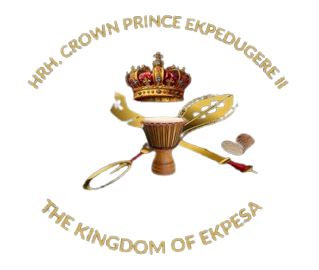
The OBA and royal family maintain traditional regalia that represents the authority and heritage of Ekpesa Kingdom. These symbols include:
- Royal Crown: Symbol of monarchy and divine authority
- Traditional Staffs: Emblems of leadership and traditional power
- Ceremonial Robes: Clothing that reflects royal status and occasion
- Royal Seals: Official documents and kingdom correspondence
These regalia are used during important ceremonies, council meetings, and cultural festivals to maintain the dignity and authority of the monarchy.